The dance, its music and its meaning
What is cueca? Chile's national dance
A couple, two handkerchiefs and a courtship chase: how the cueca is danced, where it comes from, its regional forms, and where to see it in Santiago.
See Bali Hai dinner show tickets on GetYourGuide ↗Quick answer
The cueca is Chile's national dance, a courtship dance for a man and a woman who circle each other waving handkerchiefs without touching. Chile named it the national dance in 1979, and it is most danced in September, during the Fiestas Patrias. Visitors can see it at public celebrations then, or at a folklore dinner show such as Bali Hai in Las Condes, whose own site says a cueca is part of every programme.
The cueca at a glance
| Detail | |
|---|---|
| Status | National dance of Chile since 1979 |
| Danced by | A man and a woman, apart |
| Prop | A handkerchief in the hand |
| Mood | Courtship, like a rooster and a hen |
| Peak season | September, Fiestas Patrias |
| National Cueca Day | 17 September |
What the cueca is
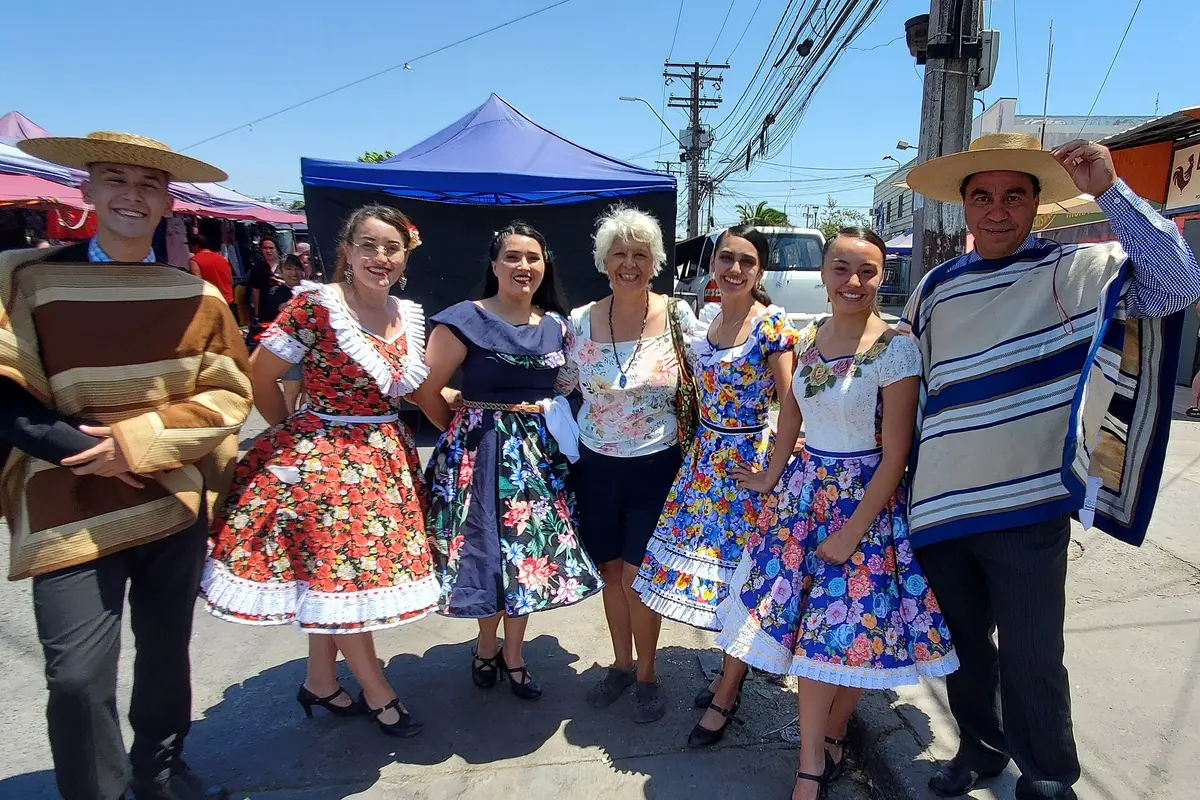
The cueca is a family of musical styles and dances, not one fixed routine. In its Chilean form, a man and a woman dance as a pair, each with a handkerchief, tracing circles, turns and half-turns around each other. The partners move independently and do not hold hands. Under other names, versions of the dance are found from Colombia to Argentina. Chile declared it the national dance in 1979, because it was the country's most widely spread folk dance and the one with the deepest historical meaning. Since 1989, 17 September has been National Cueca Day.
How the dance goes
The man invites the woman onto the floor and they walk arm in arm in a semicircle. Then they face each other with handkerchiefs raised and the sequence begins: four turns, separated by steps forward and back. She usually brushes the floor with her feet while he stamps, and the stamping takes over as the dance builds. A full cueca is normally three rounds of the tune, which Chileans call pies. Dancers have a lot of freedom in their steps, so no two couples dance it quite alike.
- The handkerchief, held up and waved throughout
- The pair stay apart and flirt with looks and movement
- Her brushing steps against his stamping
- The turns, which give the dance its circular shape
A rooster and a hen
The usual reading of the dance is a courtship between a rooster and a hen. The man is enthusiastic, at times even aggressive. The woman is elusive and demure. They never touch, but they flirt through their faces and their movement. The dance often ends with the man on one knee and the woman placing her foot on his raised knee. That is an interpretation, not a rule. It explains why the handkerchief matters so much: it is the dance's signature prop, waved by both partners from start to finish.
The music and the words
The cueca is sung as well as danced. The song has two stanzas and a short closing couplet, called the remate, and the music repeats a section known as the pie. In central Chile a woman usually sings, with guitar, accordion and percussion, and the audience adds handclaps. In the north the sound is different: panpipes and brass bands, with no singing at all. Groups of singers and players also sing the cueca in turns, in a circle, which Chileans call a rueda cuequera.
Where the cueca comes from
Nobody agrees on a single origin. Most accounts link the cueca to the zamacueca, a dance popular in Peru around 1800, and cite Spanish and Arab-Andalusian roots. Some writers have argued for African or Mapuche roots. The cueca was known in Chile by 1824. For a time the Chilean version was called la chilena elsewhere in South America, and after the War of the Pacific, Peru renamed its own version marinera. The dance itself dates back to the late 18th century, and Chilean sailors and adventurers carried it to the Mexican coast, where it was also called la chilena.
Not one cueca but several
Chile has regional versions. The northern cueca is slower, played by panpipes and brass at religious festivals and carnival, with no singing. In Chiloé a man usually sings, with accordion, guitar and bass drum, and the steps are shorter with doubled stamping. Cueca brava, also called cueca chora, is the urban version. From the late 1950s its songs dealt with the underworld of big cities, and its groups use accordion, guitar, piano and a frame drum called a pandero. The version most visitors see at a folklore show is the central one, in huaso dress.
Cueca sola: the dance with one dancer
In Chile the cueca also carries a political meaning. In 1978, Violeta Zúñiga and other members of the Association of Families of the Detained-Disappeared created the cueca sola as a peaceful protest against the military dictatorship. A woman dances alone, holding a photograph of her missing loved one. It appeared in the television campaign for the "No" side in the 1988 plebiscite, and it inspired Sting's song "They Dance Alone". The dictatorship, for its part, promoted the cueca as a national symbol, which is part of why many Chileans see the dance as more than a folk tradition.
When Chileans dance it
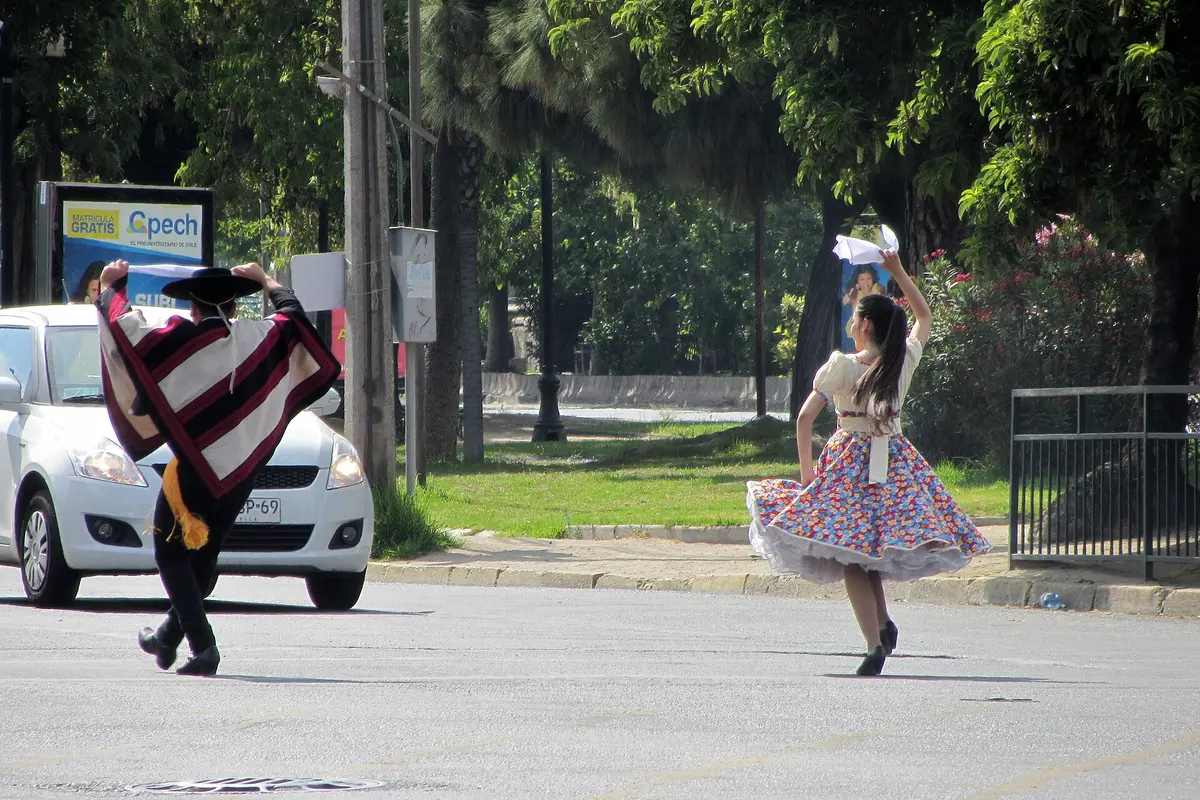
September is the cueca's month. During the Fiestas Patrias, cueca academies fill up, dance floors are set up for learning, and authorities traditionally open the celebrations with a cueca. Competitions run through the year, and the national championships send one couple from each region. The dance lost ground through the 20th century and became tied mainly to patriotic occasions, but a new generation of dancers has brought it back. Outside September, a trained group at a folklore show is the most reliable way for a visitor to watch it.
Seeing the cueca at Bali Hai
Bali Hai is a restaurant with a live show in Las Condes, Santiago, open since 1982. Its own site says the cueca is part of the folklore show in every performance, danced in huaso dress, and that the folklore programme travels from Chile's far north to the islands of the south. The cueca is one dance in a long evening: the show also has Rapa Nui and Polynesian dances, a host and an orchestra, and the restaurant invites guests to dance at the end. The GetYourGuide booking adds dinner and hotel pickup and drop-off.
Read next: Bali Hai menu and how to book
Who this isn't for
If you only want to see a cueca, a dinner show is a long way round: the booking is about four hours, with dinner, Polynesian dances and an orchestra around the cueca. Come in September instead and you can watch Chileans dance it themselves at the Fiestas Patrias. If you want to learn the steps, a show will not teach them. The dancing at the end is social dancing, not a lesson, and the cueca sola is a memorial dance, not an entertainment. The package also runs Monday to Saturday only, so on a Sunday you will need another plan.
Frequently asked questions
What is the cueca?
The cueca is Chile's national dance. A man and a woman circle each other, each waving a handkerchief, in a courtship dance that is often compared to a rooster and a hen. They move independently and do not hold hands.
Why do cueca dancers wave handkerchiefs?
The handkerchief is an essential part of the dance. Both partners hold one up and wave and turn it as they circle, and the waving helps carry the courtship, since the dancers do not touch.
Is the cueca from Chile or Peru?
Its origin is disputed. Most accounts link it to the zamacueca, which was popular in Peru around 1800, and the cueca was known in Chile by 1824. Chile declared it the national dance in 1979.
When is National Cueca Day?
National Cueca Day is 17 September, set in 1989. It falls in September, the month of the Fiestas Patrias, the independence celebrations, when the cueca is danced most widely across Chile.
Is the cueca danced in other countries?
Yes. Versions are danced in Bolivia and Argentina, among other countries, and in Bolivia the cueca is recognised as national intangible heritage. Each version has its own rhythm and steps.
Can I see a cueca as a visitor in Santiago?
Yes. The September Fiestas Patrias are the best time. At other times, a folklore dinner show is the most reliable option: the Bali Hai site says a cueca is part of each programme. Check the current dates before you go.
Sources